
Brewing Cold Brew Coffee: Brewing the Perfect Concentrate
Brewing Your Cold Brew Coffee Concentrate
To make a cold brew concentrate, follow these simple steps:
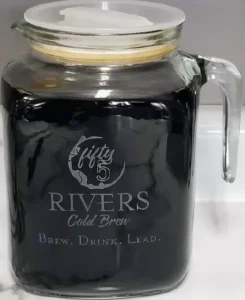
Steps for brewing the perfect cold brew coffee concentrate
- Grind the Beans – Use a coarse grind for optimal extraction.
- Mix Coffee and Water – Use a 1:5 ratio of coffee grounds to water (by weight). For example: 200g of coffee per 1000ml (1L) of water.
- Steep Time – Let the mixture steep for 15 to 21 hours at room temperature. We recommend starting with 18 hours.
- Strain the Grounds – Use a fine mesh strainer or coffee filter to separate the grounds from the liquid.
- Store the Concentrate – Transfer the strained cold brew coffee into the refrigerator immediately.
Diluting and Serving Cold Brew Coffee Concentrate
- Mild Strength – 1 part concentrate to 3 parts water (1:3 ratio)
- Stronger Flavor – 1 part concentrate to 2 parts water (1:2 ratio)
You can also experiment with adding milk or a milk alternative instead of water.
Your cold brew coffee concentrate will stay fresh in the fridge for up to one week.
Once your concentrate is ready, you can dilute it based on your preference.
Key Brewing Cold Brew Coffee Considerations
Measuring Ratios
We recommend using weight-based measurements for precision. If you prefer using volume:
- 1 ml of water = 0.033814 ounces
- Convert ratios accordingly based on your preferred measuring system.
For liquid-to-liquid dilution (e.g., 1:3 concentrate to water), you can measure by parts, liters, or ounces.
Water Quality Recommendations
Your water affects the flavor of your cold brew. We suggest:
If using a home filtration system, ensure the filter is regularly replaced for consistent results.
Grind Size Matters
For best results, grind your beans to a coarse texture, similar to:
Using a finer grind can lead to over-extraction, which results in a bitter taste.
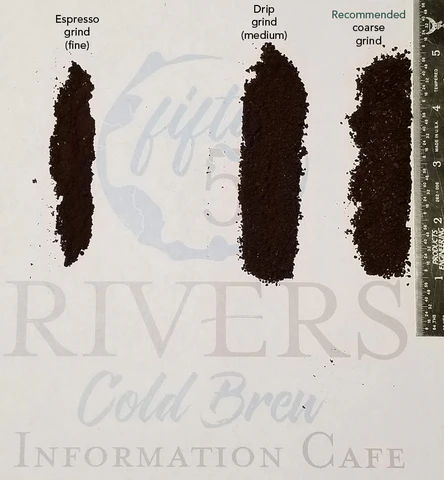
Cold Brew Grind Size: A Closer Look
Grind size is the single variable that most often separates smooth cold brew from a bitter, cloudy batch. Cold brew steeps for 12–24 hours, so the water has an enormous amount of time to pull compounds out of the coffee. The grind is what controls how fast that happens. Get it wrong and no adjustment to your ratio or steep time will fully rescue the batch.
Aim for a texture like coarse sea salt or raw sugar — visibly chunky, with distinct particles you can pick out individually. This is the coarsest setting most burr grinders offer, and it is deliberately far from an espresso grind.
Coarse or fine for cold brew? Always coarse.
The reason is surface area. Finer particles expose dramatically more surface to the water, and extraction accelerates accordingly. In a two-minute hot brew that speed is exactly what you want. Across an 18-hour cold steep, it is a liability: the coffee sails past the sweet spot and keeps going, pulling out the harsh, bitter compounds that a coarse grind leaves behind.
What actually goes wrong with a fine grind
- Over-extraction and bitterness. The most common complaint about homemade cold brew. It is usually a grind problem, not a bean problem.
- Cloudy, silty concentrate. Fine particles pass straight through most filters and stay suspended in the liquid.
- Sludge at the bottom. Sediment settles into a layer you have to pour around.
- Clogged filters and a slow, messy strain. Fine grounds pack together and choke the filter, turning a five-minute strain into a half-hour job.
If your cold brew keeps coming out murky no matter how long you let it settle, the grind and the filter are the first two places to look. We tested the filter side of that question in detail in does the filter you use for cold brew make a difference?
What grinder setting should you use?
Burr grinder: go to your coarsest setting, or within a click or two of it. Burr grinders produce a consistent particle size, which is what you want — uniform particles extract at a uniform rate.
Blade grinder: workable, but understand the limitation. A blade grinder chops rather than mills, so you end up with a mix of boulders and dust in the same batch. That dust is what makes cold brew bitter and cloudy. Pulse in short bursts rather than running it continuously, and expect to filter more carefully.
Can you use pre-ground coffee for cold brew?
You can, but most supermarket pre-ground coffee is milled for drip machines — a medium grind that is noticeably finer than what cold brew wants. It will produce drinkable coffee, and it will also tend toward the bitter, silty end of the spectrum.
If pre-ground is what you have, compensate: shorten the steep toward the 12-hour end rather than 24, and filter twice. If you are buying coffee specifically for cold brew, look for a bag labelled coarse or cold-brew grind, or buy whole bean and grind it yourself.
Grind size and caffeine
Grind size changes extraction, and extraction changes how much caffeine ends up in the cup — which is part of why cold brew’s caffeine content varies so widely between batches and brands. We measured how that shakes out across brewing methods in our lab-tested breakdown of caffeine amounts by brewed coffee, and looked specifically at caffeine concentrations in cold brew coffee.
Grind size, at a glance
- Espresso grind — far too fine. Bitter, silty, clogs everything.
- Drip / medium grind — usable in a pinch, but expect more sediment and a sharper edge.
- Coarse grind (sea salt) — the target. Clean, smooth, easy to strain.
- Extra coarse — safe, but extraction slows down. Push the steep toward 24 hours or the result will taste thin and weak.
Once your grind is dialled in, the ratio and steep time above will do the rest. And if you would rather skip the 18-hour wait entirely, we brew ours for you — see Fifty5 Rivers Cold Brew or put it to work in one of our cold brew drink recipes.
Bean Freshness and Storage
- Freshly roasted beans provide the best flavor (AFTER off-gassing for a week).
- However, cold brew is more forgiving with older beans than traditional brewing methods.
- Store your beans in an airtight container away from heat and moisture.
Steeping Temperature and Refrigeration
- You can steep your cold brew at room temperature or in the refrigerator (cold steeping takes longer).
- Once brewing is complete, refrigerate immediately to maintain freshness and prevent bacterial growth.
- For optimal quality, use your cold brew within one week.
- If it smells or tastes off, discard it and clean your brewing container thoroughly.
Serving Your Cold Brew Coffee
Cold brew isn’t just for cold coffee! You can enjoy it in different ways:
If heating, avoid boiling, as high temperatures can alter the flavor profile.
Final Tips
We recommend using weight-based measurements for precision. If you prefer using volume:
- Experiment! Find the perfect strength and steeping time that suits your taste.
- Use quality beans and water for the best results.
- Store properly to maintain freshness and avoid contamination.
- Listen to your taste buds! If it tastes “off,” it’s time to brew a new batch.
Happy brewing!
Where to Next?
Frequently Asked Questions when brewing cold brew coffee
These FAQs should help answer common questions and make your cold brew coffee brewing experience even smoother!
From Fifty5 Rivers in Fairborn, Ohio, serving the greater Dayton area.